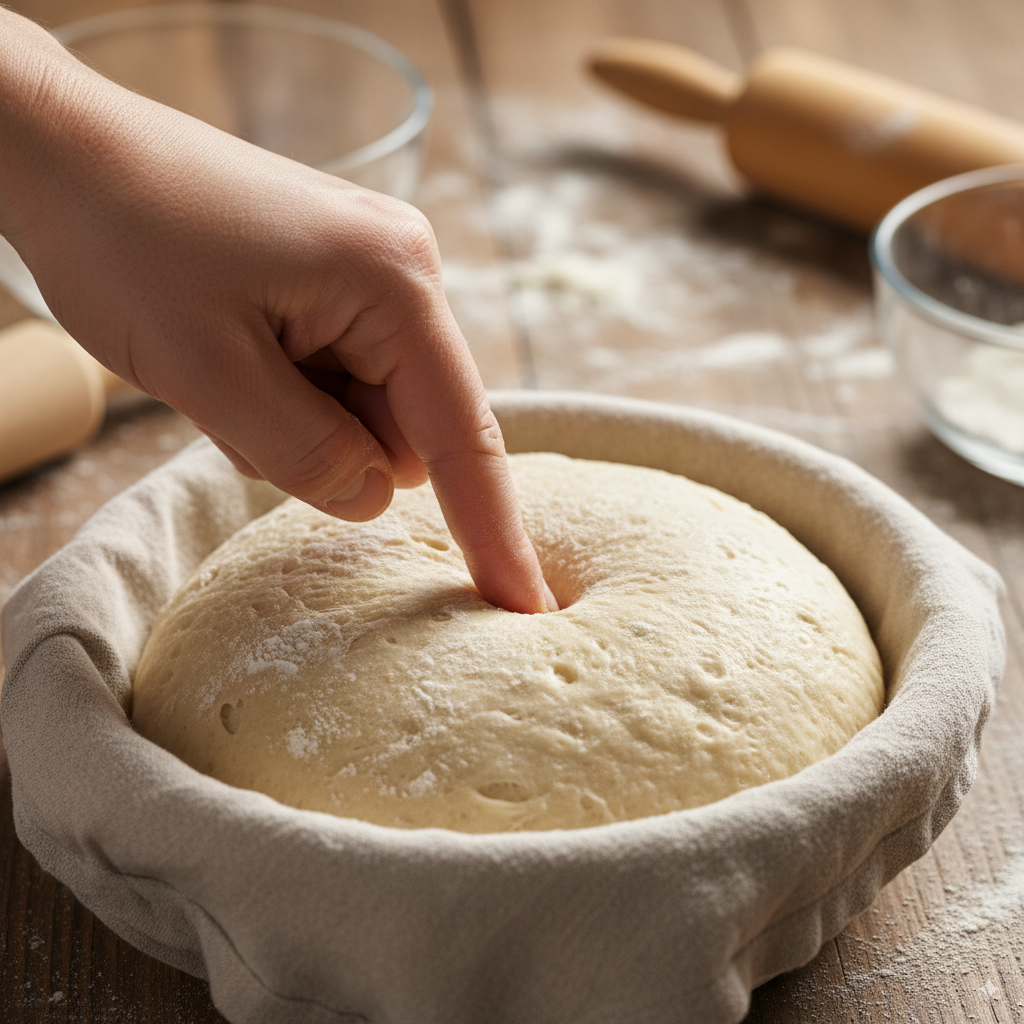
Have you ever thought: “How do I know when my dough is ready to bake?”
Timers can only tell you so much. Recipes may say “let rise for 2–4 hours,” but your dough doesn’t actually care about the clock — it cares about temperature, hydration, and your kitchen environment. That’s where the sourdough poke test comes in.
It’s simple, it’s tactile, and once you get the hang of it, it feels like your dough is talking back to you.
Table of Contents
How to Do the Sourdough Poke Test
- Prep your finger — Lightly flour or oil it so you don’t stick to the dough.
- Give it a gentle poke — Press about ½ inch (1–1.5 cm) into the surface.
- See what happens:
- Springs back fast? Still underproofed. Let it rest longer.
- Slowly springs back but leaves a little dent? Perfectly proofed. Fire up the oven!
- Doesn’t spring back at all? Overproofed. It might bake up flatter, but don’t worry — it’s still edible and usually delicious.
Why Bakers Rely on It
The sourdough poke test is most useful during the final proof — that last rise before baking. Think of it as your dough’s final check-up. Instead of guessing, you’re literally feeling the gluten structure and gas inside. This matters because:
- Underproofed dough = tight crumb and weak rise.
- Overproofed dough = collapsed loaf with less oven spring.
- Properly proofed dough = airy crumb, chewy texture, and gorgeous rise.
Why There’s a Bounce (or Not)
So why does dough respond the way it does? The answer lies in the gluten network and the gases produced during fermentation and the sourdough poke test helps demonstrate if it is ready.
- When it springs back quickly:
Your dough’s gluten network is still tight and elastic, like a stretched rubber band. It hasn’t relaxed enough, which means there’s more fermentation needed. Yeast and bacteria haven’t produced enough carbon dioxide to fully fill the dough structure, so it resists your poke. - When it springs back slowly with a soft dent:
This is the sweet spot. The gluten has stretched and relaxed, but it still has strength. Gas bubbles are evenly distributed inside, so your poke compresses the structure slightly but it recovers gently. That balance of elasticity and extensibility signals the dough is ready for the oven. - When it doesn’t spring back at all:
The gluten network has weakened and can no longer hold its shape. Fermentation has gone too far, and the gas has stretched the gluten to its limit. Instead of bouncing back, the dough just sighs and stays where you poked it. Overproofed dough can still bake into good bread, but you’ll see less oven spring and sometimes a flatter loaf.
This little bounce — or lack of it — is essentially your dough showing you how much strength and gas it has left. It’s not magic, it’s gluten and fermentation science working together.
What Is Proofing?
Proofing is the final rise that happens after you’ve shaped your dough. During this stage, the wild yeast and bacteria continue working:
- Gas retention from yeast creates volume.
- Flavor development deepens as acids form.
- Structure improves as gluten relaxes.
Don’t confuse proofing with bulk fermentation. Bulk fermentation is the first rise (often 4–8 hours), while proofing is the crucial last step before baking.
How Long Should Sourdough Proof?
Proofing times vary depending on your environment and ingredients:
- Temperature: Warm kitchens proof faster (1–3 hours). Cooler rooms or fridge proofing can take 8–24 hours.
- Starter activity: A strong, active starter means faster proofing.
- Flour type: Whole grain ferments faster than white flour.
General guidelines:
- Room temperature: 2–4 hours.
- Cold proofing (fridge): 8–24 hours.
The Proofing Test — How to Tell When It’s Done
Since clocks aren’t always reliable, bakers use the proofing test to check readiness. Here are the main signs:
- Volume increase: Dough should expand by 30–50%, not double.
- Surface tension: Smooth and slightly domed.
- The Poke Test: Gently press a floured finger into the dough.
- Springs back slowly and leaves a slight dent → perfectly proofed.
- Springs back immediately → underproofed.
- Doesn’t spring back → overproofed.
- The Jiggle Test: Shake the basket—properly proofed dough wobbles like a water balloon.
Using these simple proofing tests will give you more accuracy than relying on timing alone.
A Few Tips to Get It Right
- Cold dough behaves differently. If your dough is coming out of the fridge, it’ll spring back quicker than room temp dough. Let it warm slightly before testing.
- High-hydration doughs are softer. They’ll respond more slowly to pokes, so learn the feel of your particular recipe.
- Don’t just poke — observe. Look at dough volume, surface bubbles, and texture along with your poke results.
My Take
At first, the sourdough poke test feels almost too simple. But after a few bakes, you’ll notice your confidence growing. You’ll stop stressing over whether the recipe says “3 hours” and instead trust your hands.
It’s like learning to listen to your dough’s language. And once you do, your bread turns out consistently better — with fewer surprises when you open the oven door.
Pro tip: Practice poking at different stages of bulk and final proof. Even overproofed dough is valuable because it trains your instincts for the next bake.
How do you know when sourdough is done proofing?
Your dough is proofed when it passes the poke test — the indentation springs back slowly and leaves a small dent.
Can you overproof sourdough overnight?
Yes. Long proofing, especially at warm temperatures, can cause overproofing. Cold fridge proofing slows fermentation, making overnight proofing safer.
What happens if I bake underproofed dough?
The bread will be dense, with poor oven spring and tight crumb. It may taste fine, but it won’t have the open texture of well-proofed bread.
Pingback: Sourdough Proofing Test : How to Know When Your Dough is Ready - sourdoughsavvy.com