Sourdough Troubleshooting: Find Your Problem and Fix It Fast
Every sourdough problem has a cause — and almost every cause has a straightforward fix. This page is your starting point. Find your symptom below, click through to the full guide, and get back to baking.
What’s going wrong? Find it Fast.
| Symptom | Go To: |
| I’m new and not sure where to start | → Start Here |
| My dough sticks to everything | → Sourdough Too Sticky |
| My starter won’t rise after feeding | → Sourdough Starter Not Rising |
| My loaf came out gummy inside | → Sourdough Gummy Inside |
| My loaf didn’t rise in the oven | → No Oven Spring |
| My loaf spread sideways instead of up | → Sourdough Spread Sideways |
| I’m new and don’t know where to start | → What I Wish I Knew |
| My sourdough tastes too sour or not sour enough | → Sour Sourdough Guide |
| My dough is too wet/slack | → Sourdough Hydration Guide |
| My starter seems dead or won’t activate | → Sourdough Starter Not Rising |
| I don’t know if my dough is ready to bake | → Learn the poke test |
| My results are inconsistent – sometimes great, sometimes not | → Check Your Temperature |
Sourdough Troubleshooting
Engine
Select your symptom. Get the cause. Fix the bake.
- Use starter at peak — 4–8 hours after feeding, visibly bubbly, domed, and passes the float test.
- Bulk ferment until dough has risen 50–75% and the surface shows bubbles and a domed top.
- Preheat oven and Dutch oven together for a full 45–60 minutes at 230–250°C / 450–480°F.
- Score at least ½ inch deep at a 45° angle — a shallow score won’t allow oven spring.
- Verify your oven runs true with an oven thermometer; many ovens run 10–20°C cool.
- Use the poke test before baking — properly proofed dough springs back slowly. No spring? Overproofed.
- Do 4–6 sets of stretch & folds during bulk, spaced 30 minutes apart, to strengthen gluten.
- Create surface tension when shaping: drag the boule on the bench with cupped hands to tighten the skin.
- Bake cold dough straight from the fridge — firmer dough holds shape better in the first oven minutes.
- Shorten bulk by 30–60 minutes, especially in warm kitchens above 24°C / 75°F.
- Bake covered (lid on) for the first 20 minutes — steam prevents premature browning and keeps crust elastic.
- After lid removal, lower temp by 10–15°C / 20–25°F to let heat penetrate without burning the crust.
- Use an instant-read thermometer — the interior should reach 96–98°C / 205–208°F when fully baked.
- For very high-hydration doughs (above 75%), extend covered bake time to 25 minutes.
- Tent loosely with foil in the final 10 minutes if the crust is already dark.
- Always remove the Dutch oven lid for the final 20–25 minutes of baking.
- If still pale, raise oven temp by 10°C / 20°F for the uncovered phase.
- Use an oven thermometer — many ovens run 15–20°C cool, which prevents browning.
- Leave the baked loaf in the turned-off oven with the door ajar for 10 extra minutes.
- Never cover a loaf while it cools — trapped steam will soften the crust immediately.
- A loaf that crackles musically as it cools is a sign of a well-baked crust — embrace it.
- Cool on a wire rack for at least 1–2 hours so moisture redistributes evenly from the inside out.
- If chunks are shearing off, reduce uncovered bake temperature by 10°C / 18°F.
- Ensure adequate steam in the first phase (lid on tightly) so the crust is elastic, not brittle.
- Avoid placing a hot loaf directly on a cold surface — the temperature shock can fracture the crust.
- Score with one swift, confident movement at a 45° angle, ½ inch deep — hesitation drags and tears.
- Use a sharp lame or razor blade; a dull blade won’t cut cleanly and deflects pressure sideways.
- Score cold dough straight from the fridge — it’s firmer, holds shape better, and scores more cleanly.
- Make the score long enough to channel the full expansion (at least 2/3 the length of the loaf).
- If consistently underproofing, extend bulk or final proof by 30–45 minutes in your next bake.
- Wait at least 1–2 hours after baking before slicing — the crumb continues setting as steam disperses.
- Extend bulk ferment until dough has risen 50–75% with visible bubbles on the surface and sides.
- Increase hydration slightly to 68–75% — stiffer doughs tend to have a tighter, denser crumb.
- Develop gluten through stretch & folds; better gluten holds more gas and creates a more open structure.
- Confirm your starter was truly at peak activity — a sluggish starter means less gas production overall.
- During pre-shaping, apply gentle, even pressure across the whole surface to redistribute gas uniformly.
- Allow a proper bench rest of 20–30 minutes between pre-shape and final shape for gluten to relax.
- Eliminate large air pockets during final shaping by working the dough more deliberately.
- Check proof time — if the dough is overproofed, reduce bulk or proof time in your next bake.
- Reducing hydration by 3–5% can make the dough easier to shape consistently and evenly.
- Resist cutting for at least 1–2 hours post-bake; 3–4 hours is ideal for high-hydration loaves.
- Check internal temperature reaches 96–98°C / 205–208°F before pulling from the oven.
- After removing the lid, bake a full 20–25 minutes more — this dry heat sets the crumb.
- Cool on a wire rack (not on a solid surface) so steam can also escape from the bottom.
- Cap stretch & folds at 4–5 sets spaced 30 minutes apart — more isn’t always better.
- Blend bread flour with all-purpose (80/20) to reduce total protein content and soften the crumb.
- Handle the dough gently during final shaping — over-tight shaping creates a rubber-band effect.
- Check fermentation timing — degraded gluten from overproofing leads to dense, tough crumb.
- A small addition of whole wheat (10–15%) can actually soften the crumb by interrupting long gluten strands.
- Refrigerate dough for 20–30 minutes before shaping — cold dough is dramatically more manageable.
- Use damp hands or a lightly wet bench scraper, not flour — adding flour disrupts your hydration ratio.
- Increase stretch & fold sets during bulk to build gluten strength that holds moisture better.
- A bench scraper is essential for high-hydration doughs; use it to fold and move the dough without sticking.
- For your next bake, reduce starting hydration by 5% and build up as your technique improves.
- If slightly overproofed, bake immediately — don’t discard. It may be flat but still edible.
- The poke test: dough should slowly spring back halfway. No spring back at all = overproofed.
- For future bakes, reduce bulk time by 30–60 minutes and monitor visually using a marked container.
- Ferment at 18–20°C / 65–68°F for more control — cooler temps slow yeast activity noticeably.
- Mark the side of your container with tape to track the 50–75% volume increase target.
- After pre-shaping, bench rest 20–40 minutes before final shape — gluten relaxes and becomes pliable.
- Increase hydration by 5% in your next bake to improve extensibility and workability.
- Use lukewarm water (24–26°C / 75–80°F) when mixing — cold water inhibits gluten development.
- Try autolyse: mix flour and water, rest 30–60 minutes before adding starter. This transforms dough extensibility.
- Don’t try to force stiff dough — rest it more and let gluten do the work for you.
- Always bench rest 20–40 minutes after pre-shaping. If the dough still tears, rest it longer — up to an hour.
- Work gently — sourdough responds better to coaxing than force.
- Increase hydration slightly for a more extensible dough that stretches without breaking.
- Autolyse at the start of your next bake to pre-develop gluten extensibility before any folding begins.
- When adding mix-ins (seeds, olives, herbs), fold them gently in layers to avoid tearing gluten strands.
- Feed twice daily at room temperature (24–26°C / 75–78°F) for 3–5 days consistently.
- Use filtered or bottled water at room temperature — chlorine in tap water suppresses yeast and bacteria.
- Discard all but 20–30g of starter before each feeding to concentrate the microbial culture.
- Use a 1:1:1 ratio (starter:flour:water by weight) — equal parts gives the microbes plenty to eat.
- Add 10–20% whole rye or wholewheat flour to the feeding mix to introduce more wild yeast and bacteria.
- Be patient with young starters — it can take 7–14 days to establish a reliable culture.
- Pour off any hooch (grey/brown liquid) or stir it back in, then feed immediately.
- Feed at a higher ratio: 1:2:2 (starter:flour:water) to dilute acidity and give the culture more to work with.
- Switch to twice-daily feedings at room temperature until the smell becomes pleasantly tangy-yoghurt.
- A mild sour smell is completely normal — a sharp acetone or nail-varnish smell means it needs feeding urgently.
- To prevent this: refrigerate your starter and pull it out 1–2 days before baking to reactivate.
- Find a warm spot: 24–28°C / 75–82°F is the sweet spot for starter activity — top of the fridge, near the oven.
- Switch to unbleached bread flour, or blend in 20% whole rye or wholewheat which carries more wild yeast.
- Do the float test: drop a teaspoon into water — a healthy starter should float.
- Feed twice daily for 5–7 days consistently to build up the yeast population before baking.
- Always measure by weight, not volume — ratios by volume are inaccurate and can starve the culture.
- Discard the entire starter immediately. Pink or orange colouring (Serratia marcescens) is a health risk.
- Thoroughly wash and sterilise the jar before starting a new culture.
- Note: grey or dark liquid on top is just hooch (acetic acid) — that’s normal and not contamination.
- To prevent contamination: always use a clean spoon, never leave the jar open for long, and use clean water.
- Start fresh with unbleached flour, filtered water, and a clean environment.
- Use a cold retard: shape the dough, then refrigerate overnight (8–16 hours) before baking. This one step transforms flavour.
- Extend bulk fermentation time by 1–2 hours for more acid development.
- Use a lower percentage of starter (10–15%) to slow fermentation and give more time for flavour compounds to build.
- Use a more mature, sour starter rather than one fed very recently — older starter contributes existing acids.
- Add 10–15% whole wheat or rye flour for earthier, more complex flavour notes.
- Ferment at a warmer temperature (25–28°C / 77–82°F) — warm conditions favour milder lactic acid over sharp acetic acid.
- Shorten or skip the cold retard — overnight fridge proofing significantly increases sourness.
- Use a fresher starter: feed it 2–4 hours before use so it’s active and yeasty, not over-ripened and acidic.
- Increase starter percentage to 20% to shorten overall ferment time and reduce acid accumulation.
- Reduce whole wheat/rye content, as high-bran flours contribute to greater acidity.
- Check your starter for pink or orange streaks — any unusual colour means discard and start fresh.
- Significantly shorten bulk fermentation — bitter flavour from protein degradation is a sign of over-ferment.
- Reduce oven temperature for the uncovered phase to prevent crust over-caramelisation.
- Switch to filtered water and unbleached flour to eliminate chemical interference from chlorine or bleach.
- Normal grey hooch is not contamination — only fuzzy mould or bright colour is cause for concern.
- Reduce starter quantity to 10–12% to slow yeast activity and allow bacteria more time to produce lactic acid.
- Ferment cooler — 18–22°C / 65–72°F slows yeast more than bacteria, restoring the balance.
- Extend bulk fermentation time (even if at a cooler temp) to let bacteria catch up.
- Introduce a cold retard overnight — fridge proofing suppresses yeast while bacteria keep working, adding depth.
- Use a starter that’s slightly past peak (domed and beginning to recede) rather than at maximum rise.
-
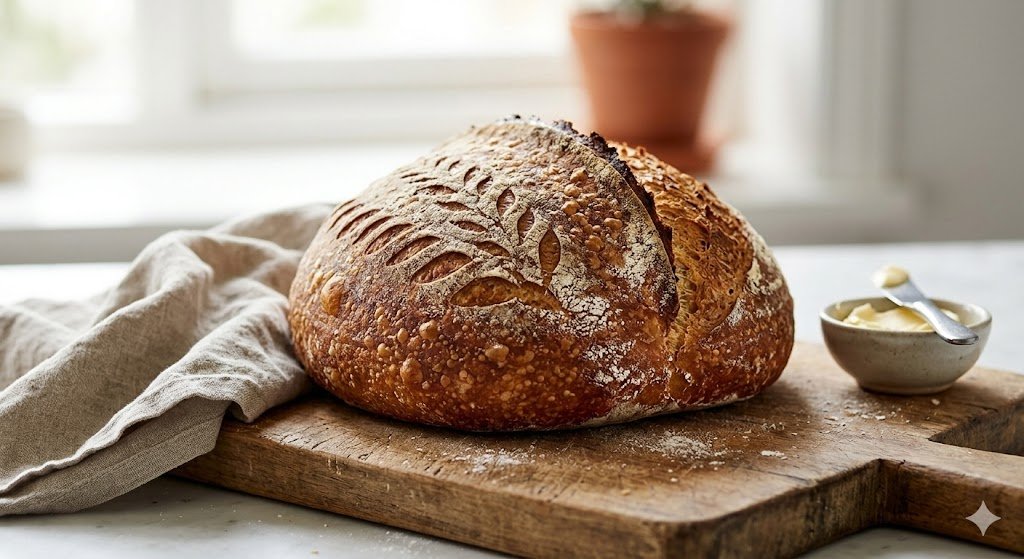
What I Wish I Knew Before My First Sourdough Loaf
My first sourdough loaf was a flat, dense, gummy disaster. It looked like someone had sat on it. The crust […]
-
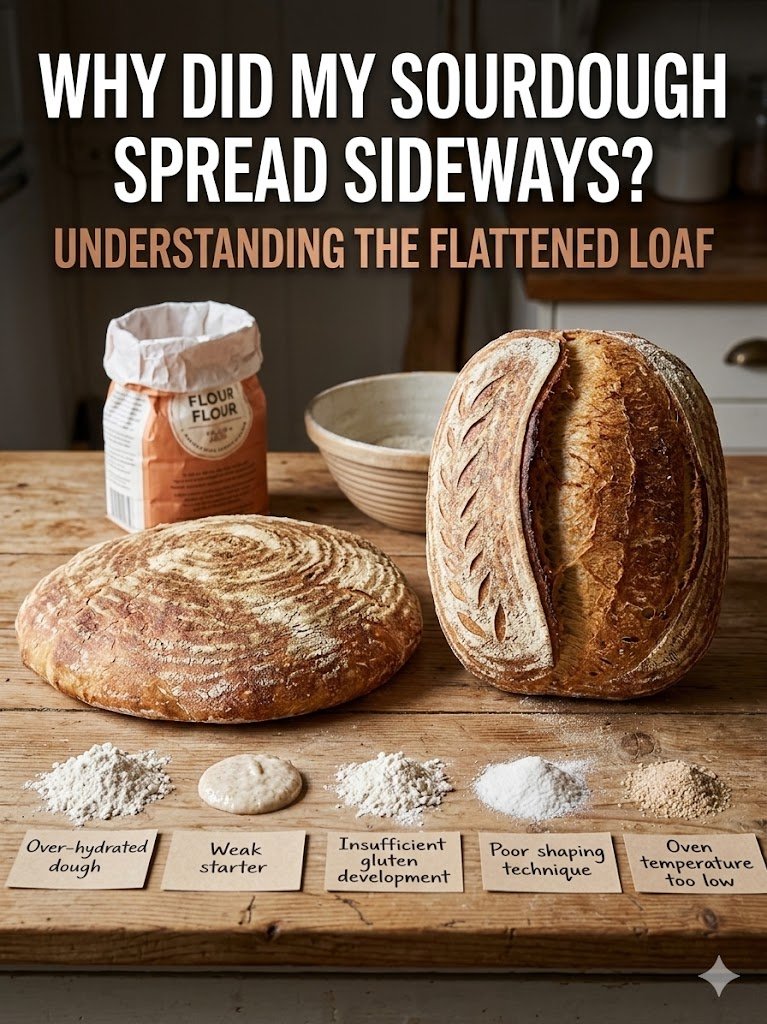
Why Did My Sourdough Spread Sideways? (And How to Fix It)
You shaped your loaf, it looked great going into the oven — and then it baked into a wide, flat […]
-
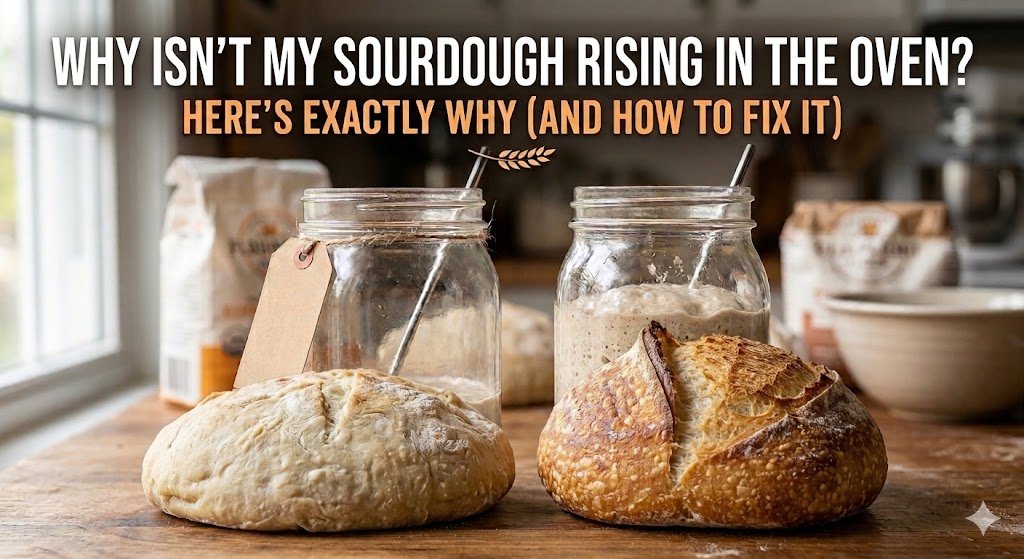
Sourdough Not Rising in the Oven? Here’s Why Your Oven Spring Failed
You shaped your dough, proofed it overnight, and slid it into a screaming hot Dutch oven. But when you lifted […]
-
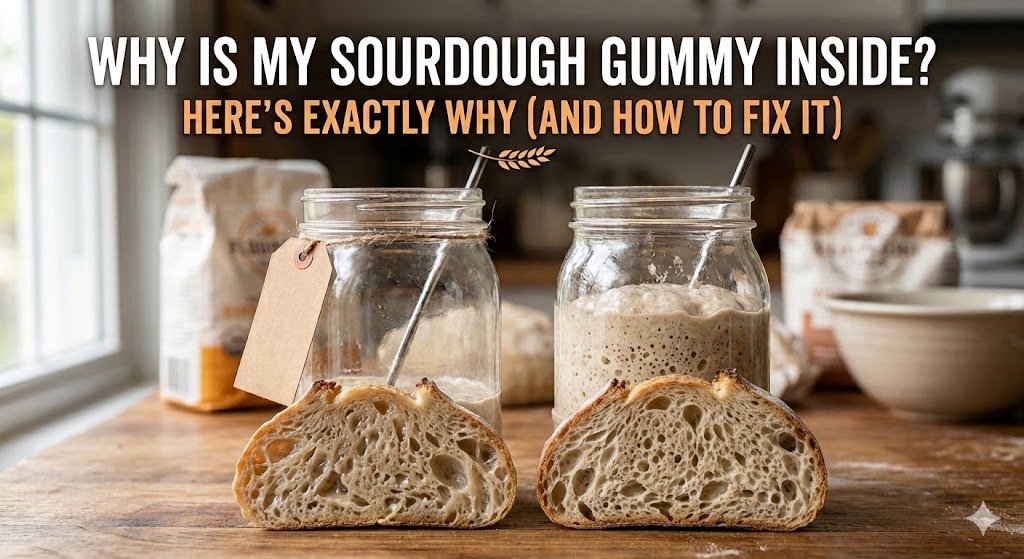
Why Is My Sourdough Gummy Inside? (And How to Fix It)
You waited all day. You scored it beautifully, baked it in your Dutch oven, and pulled out a gorgeous golden […]
-
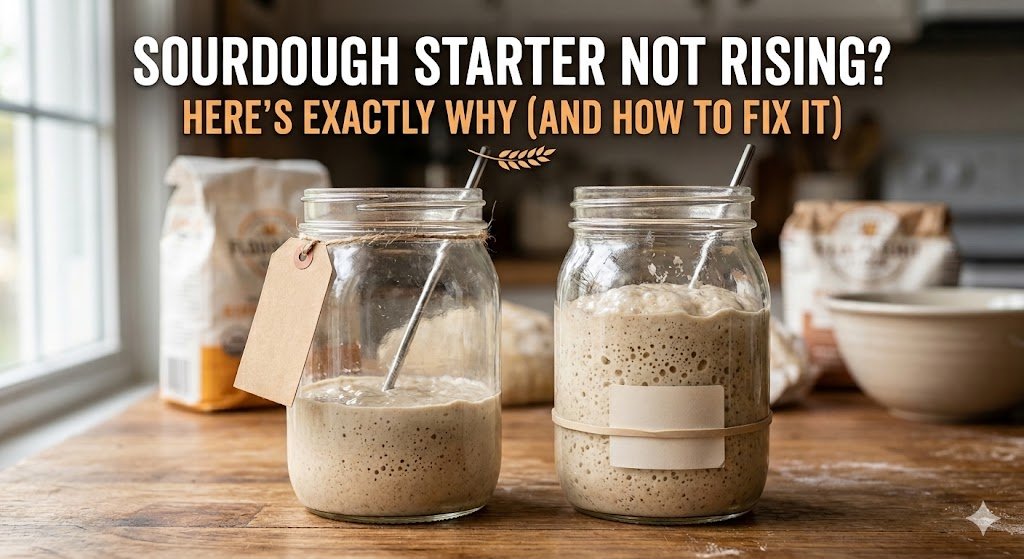
Sourdough Starter Not Rising? Here’s Exactly Why (And How to Fix It)
You fed your starter, set it on the counter, and waited. And waited. And… nothing. If your sourdough starter is […]
-
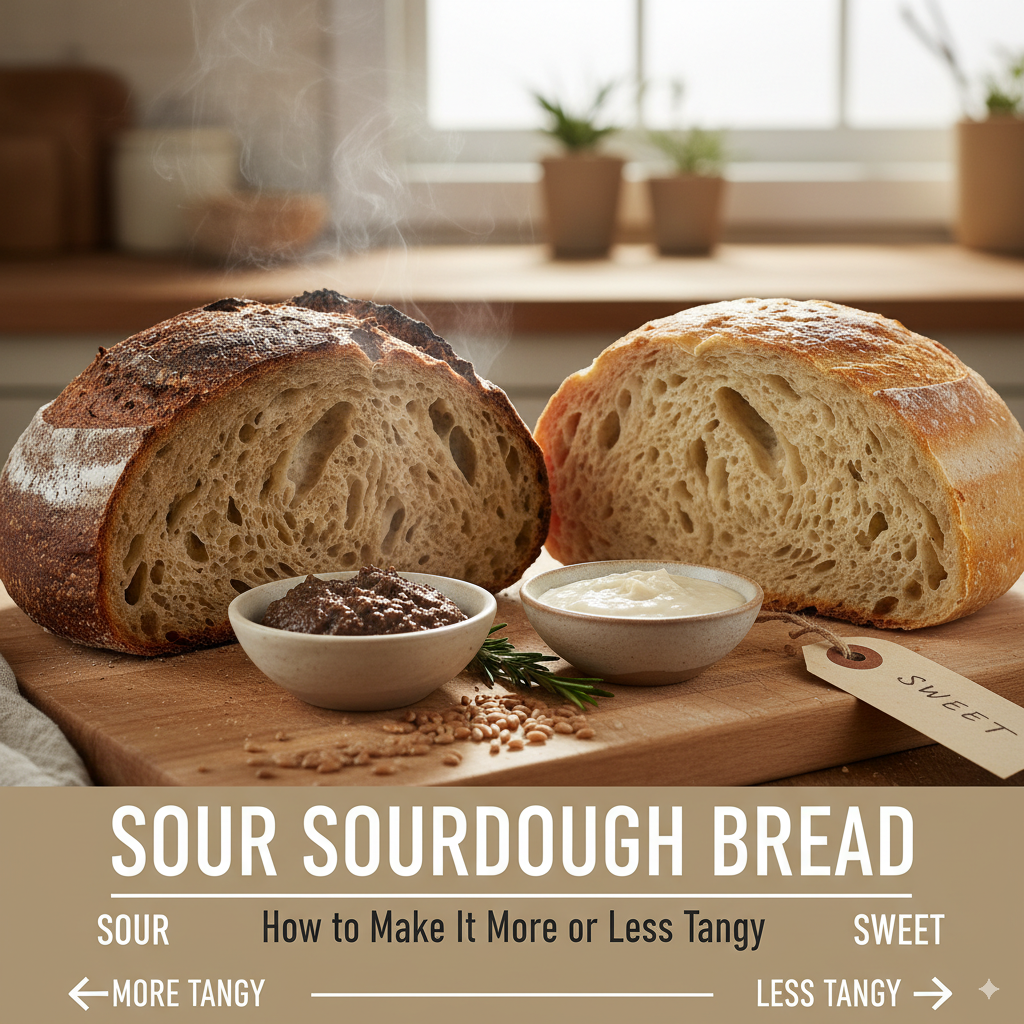
Sour Sourdough Bread: How to Get Tangier (or Milder) Loaves
If you’ve ever taken a bite of sourdough and thought, “This is tangier than usual,” you’re not imagining things. The sour flavor […]
-
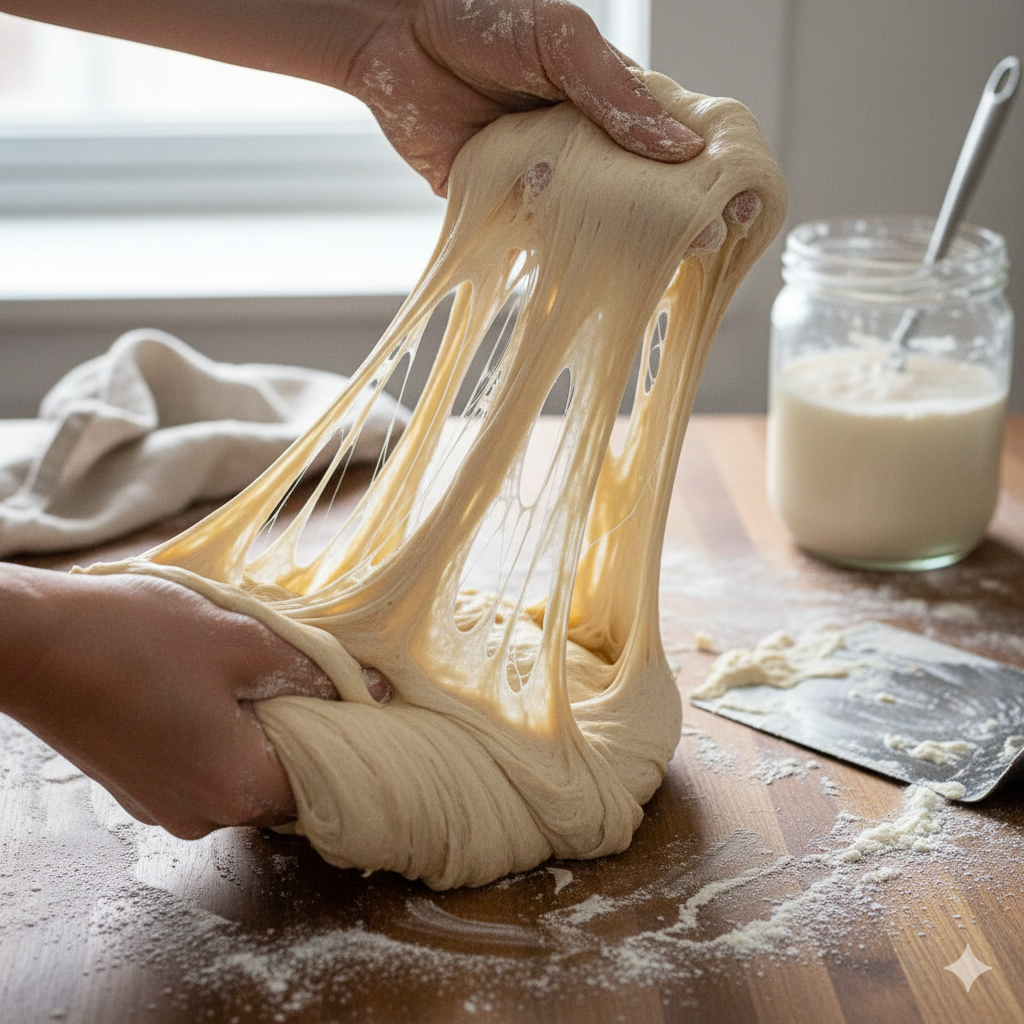
Sourdough Too Sticky? Here’s How to Fix It
Sourdough Too Sticky? Here’s Exactly How to Fix It | SourdoughSavvy Troubleshooting Beginner Help Sourdough Too Sticky?Here’s Exactly How to […]
-
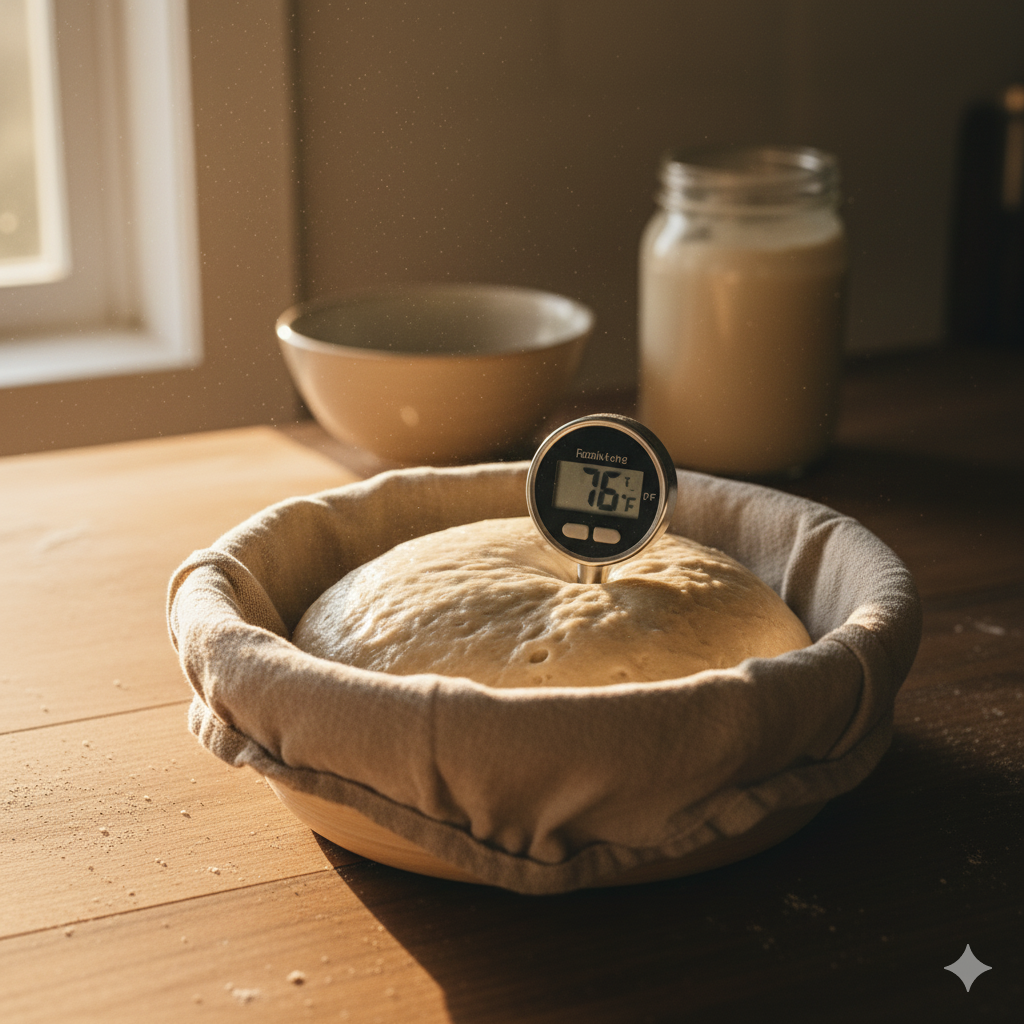
Best Temperature for Sourdough Fermentation: A Complete Guide
If you’ve ever wondered why your sourdough sometimes rises too quickly, takes forever, or bakes up dense, the answer often […]
-

Same Day Sourdough: How to Bake a Great Loaf in 8 Hours
Same Day Sourdough: How to Bake a Great Loaf in 8 Hours | SourdoughSavvy Recipe Same Day Beginner Friendly Same […]
-
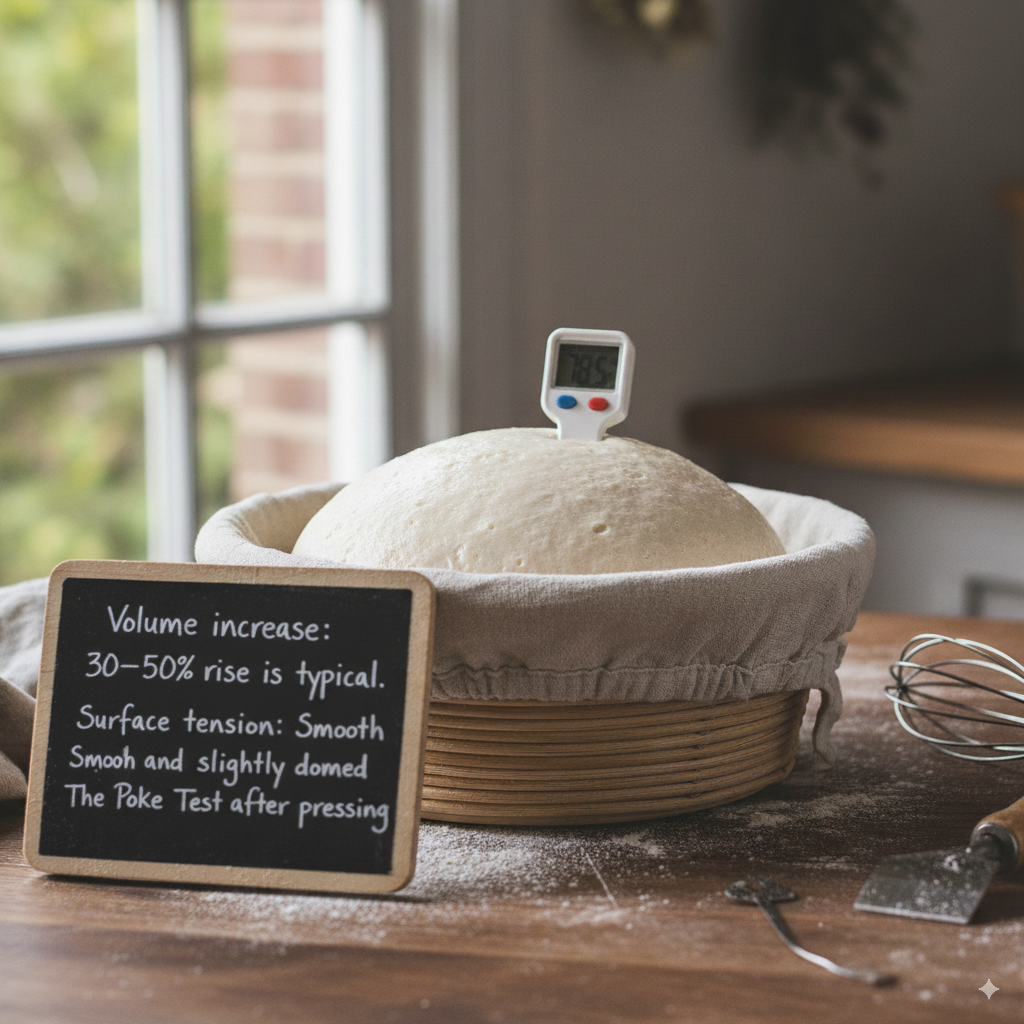
Sourdough Proofing Test : How to Know When Your Dough is Ready
Learn the proofing test to know when your sourdough is done proofing. Discover how temperature, time, and the poke test […]
New Baker? Start Here Instead
Not Sure What Went Wrong? Start With This.
If you’re new to sourdough and something went wrong on your first or second bake, the problem is usually one of the basics — starter activity, temperature, or proofing time. Before diving into specific troubleshooting, this guide covers the ten most common beginner mistakes and exactly what to change.
Can’t Find Your Problem?
If your problem isn’t listed here, it’s likely covered in one of our in-depth guides. Browse our full Learn Sourdough section, or use the search bar at the top of the page. New troubleshooting guides are added regularly — bookmark this page and check back.