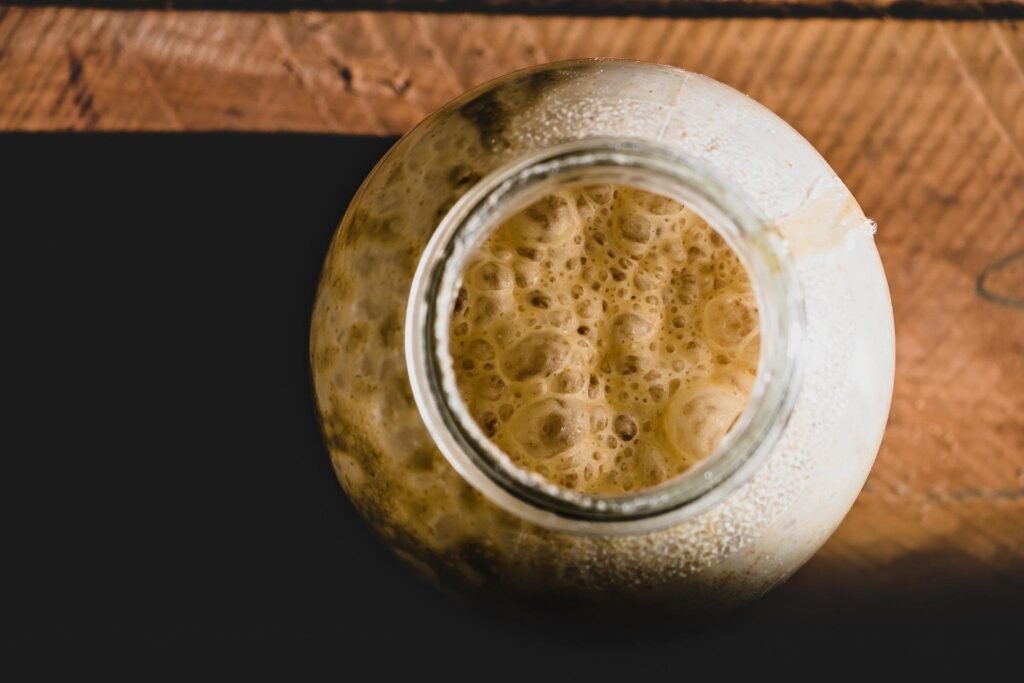
Ingredients
- 120 g 1 cup whole wheat flour or rye flour (for best results starting out)
- 120 g ½ cup water, filtered or dechlorinated
- Additional unbleached all-purpose flour and water for feedings
Instructions
- Mix 120 g flour and 120 g water in your jar.
- Stir well until no dry bits remain.
- Cover loosely and leave at room temperature (70–75°F / 21–24°C).
- You may or may not see bubbles yet. Don’t worry!
- Discard about half the starter. Add 60 g flour + 60 g water. Stir and cover again.
- Feed every 24 hours: discard half, add fresh flour and water in equal weights.
- By Day 3 or 4, you should start seeing bubbles, a tangy smell, and some rise.
- Continue daily feedings. Your starter should be doubling in size within 4–8 hours after feeding.
- Once it does this consistently for 2–3 days in a row, it’s ready to bake with.
Frequently Asked Questions
Q: How long does Simple Sourdough Starter Recipe stay fresh?
You can store Simple Sourdough Starter Recipe in an airtight container at room temperature for up to 3 days. For longer storage, freeze it in an airtight bag for up to 3 months. Thaw at room temperature before serving.
Q: Can I use active dry yeast instead of sourdough starter for Simple Sourdough Starter Recipe?
This recipe is specifically developed to utilize the natural wild yeast in a sourdough starter. While you can technically substitute commercial yeast, it requires drastically altering the hydration levels and proofing times, which changes the authentic flavor profile.
Q: Why is my dough too sticky or hard to handle?
Sticky dough is incredibly common in sourdough baking. It is usually caused by either over-hydration (adding too much water for your flour's absorption capacity) or over-fermentation. If the dough is unmanageable, try reducing the liquid by 5-10% on your next bake, or perform an extra set of stretch and folds to build gluten strength.