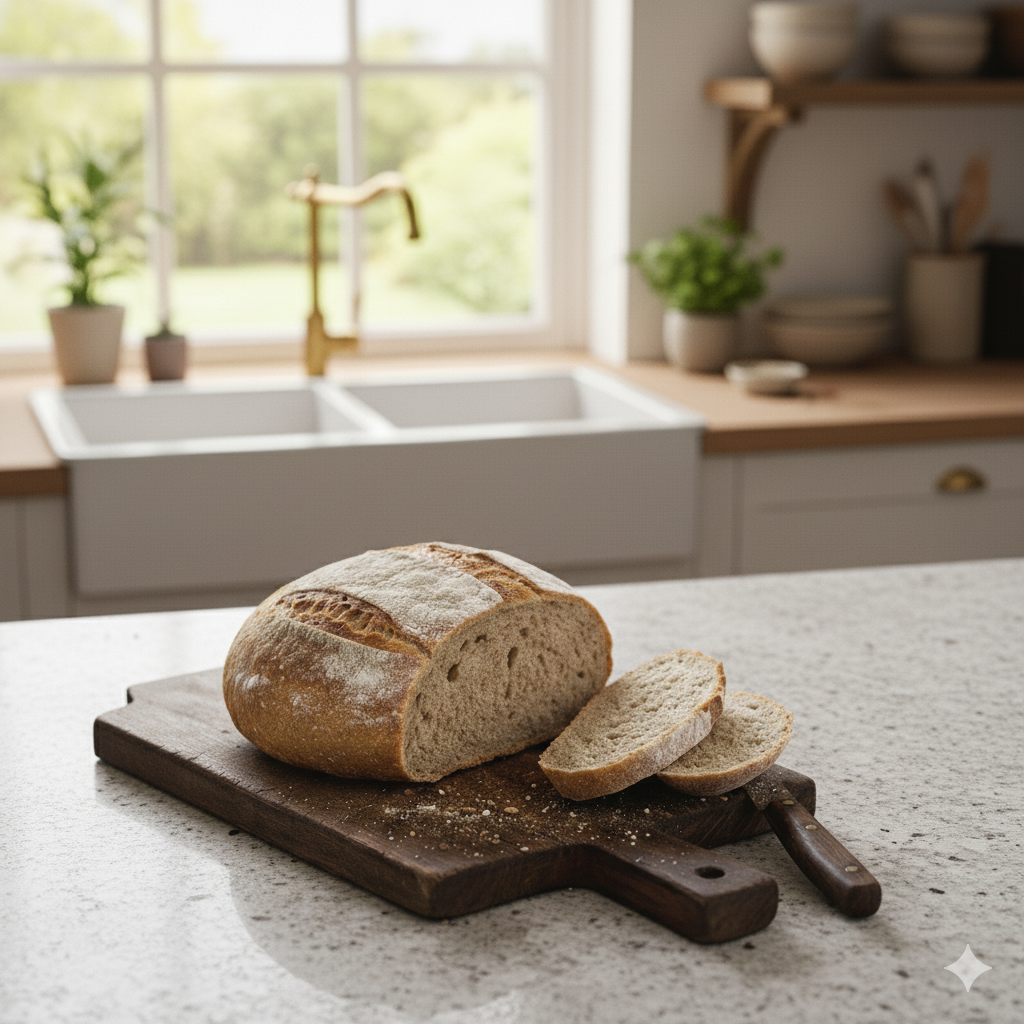
Ingredients
- 150 g brown rice flour
- 100 g sorghum flour
- 50 g oat flour
- 50 g tapioca starch or potato starch
- 1 tsp xanthan gum or guar gum
- 350 –375g water
- 100 g active gluten-free sourdough starter
- 10 g salt
- 1 tbsp olive oil or melted butter
Instructions
- In a large bowl, whisk together the flours, starch, and xanthan gum. Add the water and stir until smooth. The mixture will be thicker than a batter but wetter than traditional dough. Let rest 30 minutes (autolyse).
- Stir in the gluten-free sourdough starter, salt, and oil (if using). Mix thoroughly until fully combined. The dough will feel sticky—this is normal.
- Cover the bowl and let the dough rise at room temperature for 6–8 hours, until slightly puffed. Gluten-free dough doesn’t rise as dramatically, so look for gentle swelling rather than doubling in size.
- Line a loaf pan with parchment or lightly grease. Transfer the dough into the pan using a spatula. Smooth the top gently.
- Cover and let the dough rest 2–3 hours at room temperature, or refrigerate overnight for deeper flavor.
- Preheat to 425°F (220°C). Place an oven-safe dish of water on the bottom rack to create steam (optional, helps with crust).
- Bake for 50–55 minutes, until the top is golden brown and a skewer inserted in the center comes out clean.
- Remove the bread from the pan and let it cool on a wire rack for at least 1 hour. Gluten-free bread needs extra time to set before slicing.
Frequently Asked Questions
Q: How long does Gluten-Free Sourdough Bread stay fresh?
You can store Gluten-Free Sourdough Bread in an airtight container at room temperature for up to 3 days. For longer storage, freeze it in an airtight bag for up to 3 months. Thaw at room temperature before serving.
Q: Can I use active dry yeast instead of sourdough starter for Gluten-Free Sourdough Bread?
This recipe is specifically developed to utilize the natural wild yeast in a sourdough starter. While you can technically substitute commercial yeast, it requires drastically altering the hydration levels and proofing times, which changes the authentic flavor profile.
Q: Why is my dough too sticky or hard to handle?
Sticky dough is incredibly common in sourdough baking. It is usually caused by either over-hydration (adding too much water for your flour's absorption capacity) or over-fermentation. If the dough is unmanageable, try reducing the liquid by 5-10% on your next bake, or perform an extra set of stretch and folds to build gluten strength.