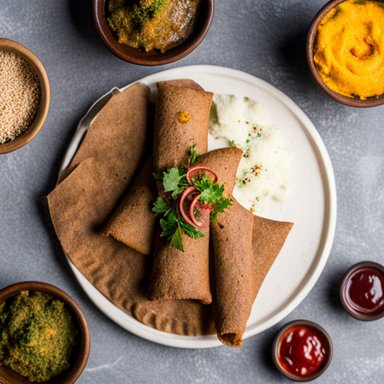
Ingredients
- 2 cups teff flour
- 1 cup all-purpose flour
- 2 cups water
- 1/2 teaspoon active dry yeast
- 1/2 teaspoon baking powder
- 1/2 teaspoon salt
- Vegetable oil
Instructions
- In a large mixing bowl, combine the teff flour and all-purpose flour. Gradually add water while whisking continuously to form a smooth batter. The consistency should be similar to that of pancake batter. Cover the bowl with a clean kitchen towel and let it sit at room temperature for at least 24 hours to ferment. This fermentation process gives the injera its characteristic tangy flavor.
- After 24 hours, you will notice that the batter has risen and developed small bubbles on the surface. This indicates that the fermentation is successful. Now, stir the batter gently.
- In a small bowl, dissolve the yeast in 1/4 cup of lukewarm water. Let it sit for 5 minutes until it becomes frothy.
- Add the yeast mixture, baking powder, and salt to the fermented batter. Mix well to combine all the ingredients thoroughly. The batter should have a pourable consistency but slightly thicker than before. If needed, add a little water or flour to adjust the consistency.
- Heat a non-stick skillet or a large, flat pan over medium heat. Lightly grease the surface with a small amount of vegetable oil.
- Pour a ladleful (about 1/4 to 1/3 cup) of the injera batter onto the skillet, starting from the center and working in a circular motion to spread the batter thinly and evenly. The injera should be about 6 to 8 inches in diameter. You can swirl the pan to help the batter spread if needed.
- Cover the skillet with a lid and let the injera cook for about 2 to 3 minutes until the edges start to curl up, and the surface appears dry. Injera is traditionally cooked only on one side and doesn’t require flipping. Remove the cooked injera from the pan and transfer it to a plate. Repeat the process with the remaining batter.
- As you cook more injera, stack them on top of each other to keep them warm and moist.
- Once all the injera are cooked, let them cool slightly before serving. Injera is best enjoyed fresh and warm.
Frequently Asked Questions
Q: How long does Ethiopian – Injera Recipe stay fresh?
You can store Ethiopian – Injera Recipe in an airtight container at room temperature for up to 3 days. For longer storage, freeze it in an airtight bag for up to 3 months. Thaw at room temperature before serving.
Q: Can I use active dry yeast instead of sourdough starter for Ethiopian – Injera Recipe?
This recipe is specifically developed to utilize the natural wild yeast in a sourdough starter. While you can technically substitute commercial yeast, it requires drastically altering the hydration levels and proofing times, which changes the authentic flavor profile.
Q: Why is my dough too sticky or hard to handle?
Sticky dough is incredibly common in sourdough baking. It is usually caused by either over-hydration (adding too much water for your flour's absorption capacity) or over-fermentation. If the dough is unmanageable, try reducing the liquid by 5-10% on your next bake, or perform an extra set of stretch and folds to build gluten strength.