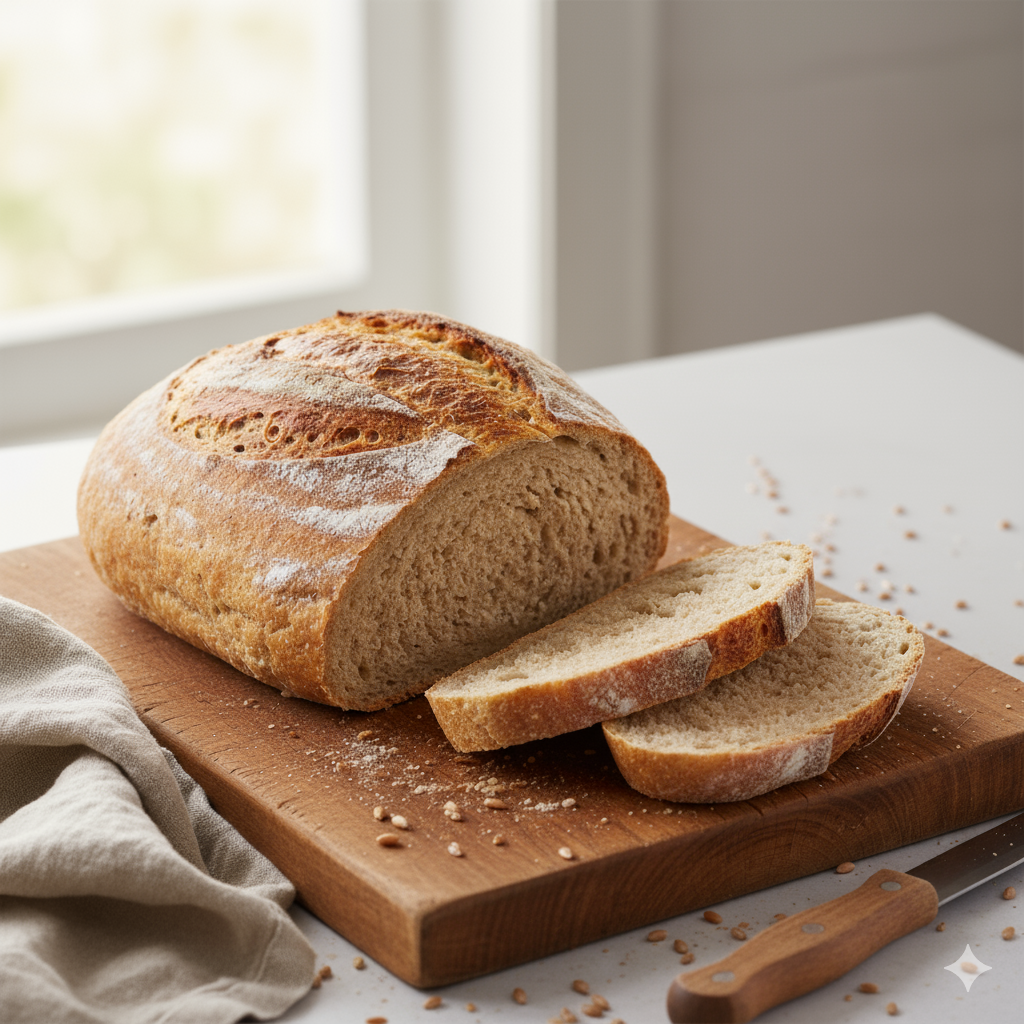
Ingredients
- 350 g 2 ¾ cups whole wheat flour
- 150 g 1 ¼ cups all-purpose flour
- 375 g 1 ½ cups + 1 tbsp water, lukewarm
- 100 g ½ cup active sourdough starter
- 10 g 1 ½ tsp salt
Instructions
- Mix the flours and water in a bowl until no dry bits remain.
- Cover and rest for 30–60 minutes. This hydrates the flour and starts gluten development.
- Add Starter and Salt
- Mix in your active starter and salt until incorporated.
- Dough will be sticky — that’s normal for whole wheat.
- Perform stretch and folds every 30–60 minutes for the first 2–3 hours.
- Keep dough covered in a warm, draft-free spot (75–78°F / 24–26°C is ideal).
- Gently shape dough into a boule or batard.
- Place in a floured banneton or cloth-lined bowl.
- Cover and let dough rise at room temperature for 1.5–3 hours or retard in the fridge overnight for more flavor.
- Check readiness with the poke test: a slow spring-back with a slight dent means it’s ready to bake.
- Preheat oven to 475°F (245°C) with a Dutch oven inside for 30–45 minutes.
- Transfer dough into the Dutch oven, score the top, cover, and bake:
- 20–25 min covered
- 20–25 min uncovered to brown the crust
- Internal temperature should reach 205–210°F (96–99°C) for fully baked bread.
Frequently Asked Questions
Q: How long does Whole Wheat Sourdough Bread Recipe stay fresh?
You can store Whole Wheat Sourdough Bread Recipe in an airtight container at room temperature for up to 3 days. For longer storage, freeze it in an airtight bag for up to 3 months. Thaw at room temperature before serving.
Q: Can I use active dry yeast instead of sourdough starter for Whole Wheat Sourdough Bread Recipe?
This recipe is specifically developed to utilize the natural wild yeast in a sourdough starter. While you can technically substitute commercial yeast, it requires drastically altering the hydration levels and proofing times, which changes the authentic flavor profile.
Q: Why is my dough too sticky or hard to handle?
Sticky dough is incredibly common in sourdough baking. It is usually caused by either over-hydration (adding too much water for your flour's absorption capacity) or over-fermentation. If the dough is unmanageable, try reducing the liquid by 5-10% on your next bake, or perform an extra set of stretch and folds to build gluten strength.