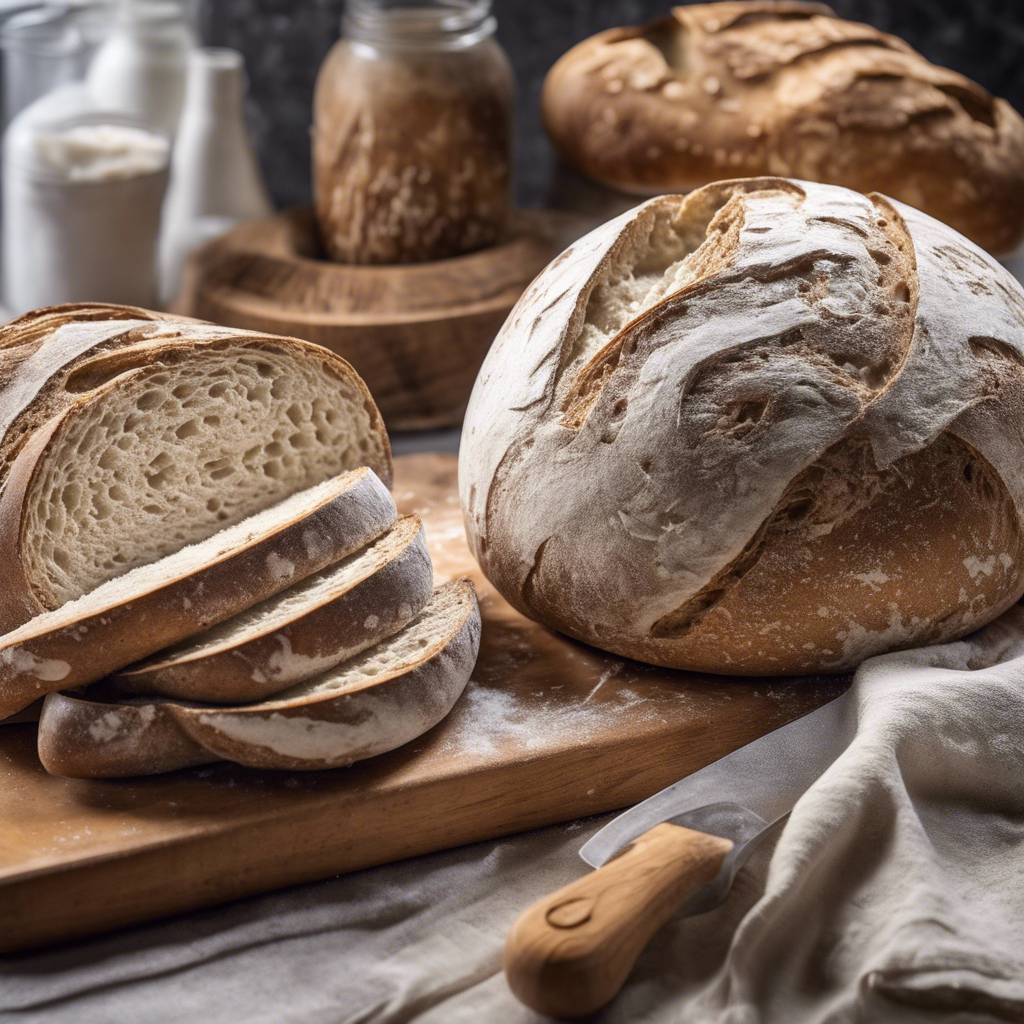
Ingredients
- 3 cups all-purpose flour
- 1 ½ cups water
- 1 cup plain yogurt or buttermilk
- 2 teaspoons salt
- 1 teaspoon instant yeast
- 1 tablespoon honey or sugar
Instructions
- In a large mixing bowl, combine the flour, yogurt or buttermilk, and water. Stir until a shaggy dough forms.
- If desired, add instant yeast and honey or sugar to enhance the rise and flavor. Mix well.
- Sprinkle salt evenly over the dough and incorporate it thoroughly.
- Cover the bowl with a clean kitchen towel or plastic wrap and let it rest for 2-3 hours at room temperature. This allows the fermentation process to take place.
- Preheat your oven to 450°F (230°C) and place a Dutch oven or oven-safe pot with a lid inside to heat up.
- Once the dough has risen and developed small bubbles on the surface, gently shape it into a round or oval loaf on a well-floured surface.
- Carefully transfer the shaped dough into the preheated pot. Cover with the lid and bake for 30 minutes.
- Remove the lid and bake for an additional 15-20 minutes until the bread is golden brown and sounds hollow when tapped on the bottom.
- Allow the bread to cool on a wire rack before slicing.
Frequently Asked Questions
Q: How long does Cheater Sourdough Recipe stay fresh?
You can store Cheater Sourdough Recipe in an airtight container at room temperature for up to 3 days. For longer storage, freeze it in an airtight bag for up to 3 months. Thaw at room temperature before serving.
Q: Can I use active dry yeast instead of sourdough starter for Cheater Sourdough Recipe?
This recipe is specifically developed to utilize the natural wild yeast in a sourdough starter. While you can technically substitute commercial yeast, it requires drastically altering the hydration levels and proofing times, which changes the authentic flavor profile.
Q: Why is my dough too sticky or hard to handle?
Sticky dough is incredibly common in sourdough baking. It is usually caused by either over-hydration (adding too much water for your flour's absorption capacity) or over-fermentation. If the dough is unmanageable, try reducing the liquid by 5-10% on your next bake, or perform an extra set of stretch and folds to build gluten strength.